Child life specialists set pediatric patients at ease
Preparation, play and support make hospital visits less daunting
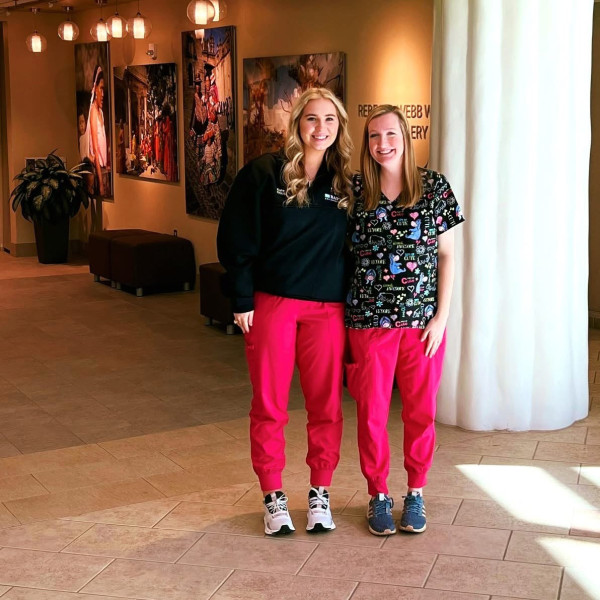
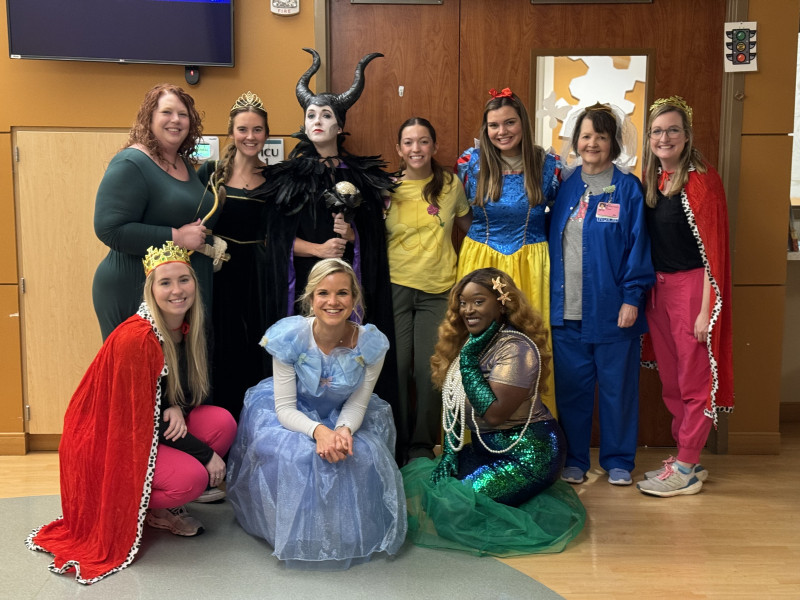
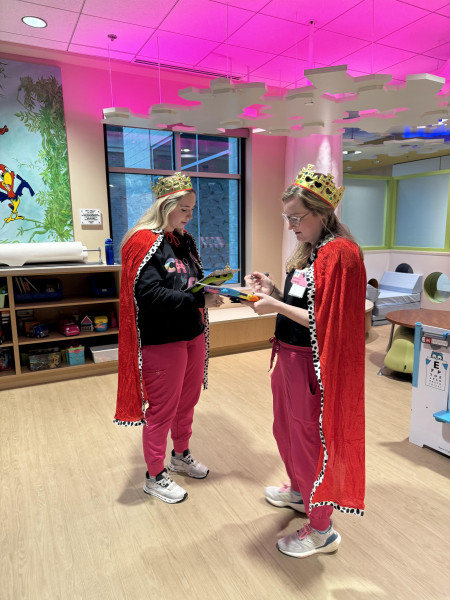
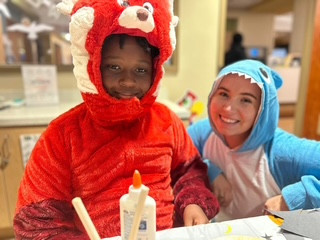
Kate Larrea and Julianne Scholes wear many hats, literally and figuratively. When we tagged along to observe them in action, they were both wearing crowns for Halloween.
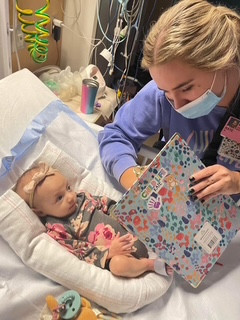
Larrea and Scholes are certified child life specialists with the Spence and Becky Wilson Baptist Children’s Hospital. Child life specialists use developmentally appropriate play, preparation and support to make a child’s hospital stay go as smoothly as possible.
Everything they do centers around helping kids feel comfortable in the hospital setting, which varies from one patient to another. When asked about a typical day, Baker laughed, “There IS no typical day. Every day is so different.”
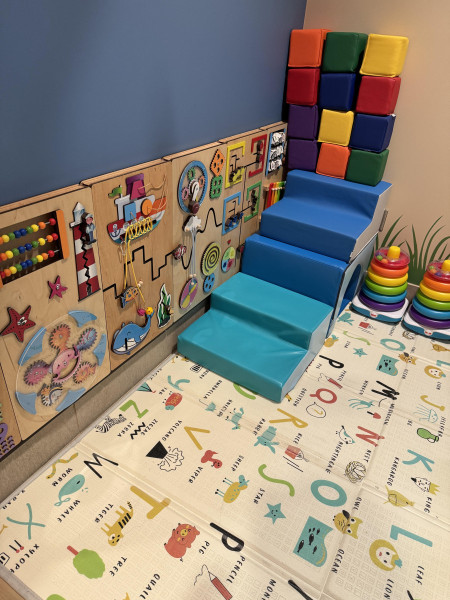
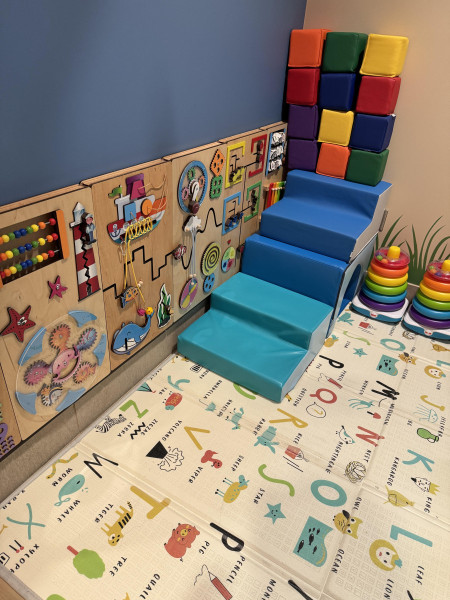
Upon entering the pediatric inpatient unit, visitors first see a large playroom. Generous gifts from Spence and Becky Wilson and the Toy Foundation funded P.D. Parrot's Playroom, which opened in the summer of 2023. This fun space is filled with toys for a variety of ages — soft foam blocks, shape sorters and stacking rings for toddlers; a dollhouse, play kitchen and doctor’s office are ideal for preschoolers; and older kids enjoy the puzzles and games, such as Connect 4.
“The language of children is play,” said Larrea. “We let them use our resource materials in a ‘play’ way, which helps us see how they’re feeling. You can tell a lot about how kids feel based on how they act during play.”
Fall and winter are busy seasons in the hospital, with many children suffering from respiratory illnesses like RSV or walking pneumonia. These children might require oxygen support or fluids, and many are in isolated rooms. The day we visited, most patients were infants, which didn’t quite work for the plan to have a Halloween party.
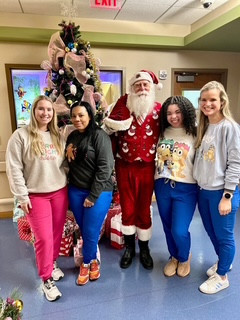
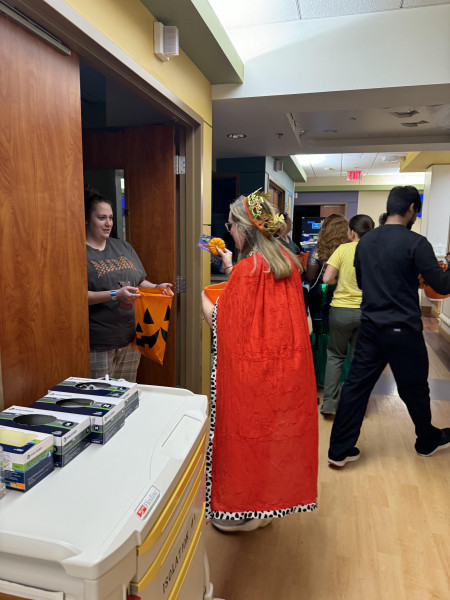
Larrea and Scholes pivoted and organized a reverse trick-or-treat instead. The pediatric team delivered candy and treats to each room and handed the goodies to parents or filled a bag left outside the room. Even if the young patients couldn’t eat the candy, their worried and exhausted parents could.
Not all fun and games
While their roles certainly involve play and fun activities, that’s not how Larrea and Scholes spend most of their time. They constantly juggle tasks to keep their tiny patients feeling comfortable and safe. A child with a fear of needles may need distraction, and the little one undergoing surgery benefits from preparation before the surgery.
Children in the pediatric unit are there for a variety of reasons. The respiratory season exacerbates asthma, so some children come in for frequent treatments. Other patients have gastrointestinal problems, such as ulcerative colitis or Crohn’s disease, which means they return to the unit for infusions. Children with skin infections, like cellulitis, may require antibiotics or surgery. Many pediatric patients are hospitalized for surgeries, including appendectomies, orthopedic surgeries or spinal fusion surgery.
“Most adults are scared of surgery,” said Larrea, “and kids have no idea what to expect. We meet with them to talk through the steps, explaining they’ll wear a face mask to help them fall asleep. We practice putting on the mask, taking deep breaths and holding still.”
Larrea and Scholes use technology to help explain procedures to their young patients. iPads are loaded with photos, videos and preparation books to show kids what hospital rooms look like. On Halloween, Larrea took an iPad into a patient’s room to show her photos of different Halloween costumes. The child chose the costume she liked, and Larrea retrieved it from a storage room. The storage room is filled with donated items, from new Halloween costumes in every size to toys for all ages.
Larrea and Scholes are often on the move. They might meet a child in the emergency department to prepare them for stitches, explaining how the nurse will numb the area first, distracting the child during the procedure with toys or bubbles, and even advocating for medicine if the child needs help calming down.
“Worried parents aren’t always able to think about all the things, especially in an emergency visit,” said Larrea. “Our job is to support patients and families, working with medical staff to find a game plan that works and is supportive. We want patients to feel as in control as they possibly can.”
“Some families don’t know if they can ask for things, like whether they can hold their child while a nurse puts in an IV,” added Scholes. “We can have those conversations with the medical staff so the parents can focus on their child.”
Sometimes they visit a child in Baptist's outpatient facilities to walk them through a procedure, and other times they spend time with children who are hospitalized in the pediatric unit.
“When they are staying in the hospital, it’s more about event processing,” said Scholes. “We help them cope with the situation through play. A lot of them have IVs, and preschool kids really hate those. We’ll put an IV on a stuffed animal to help normalize it.”
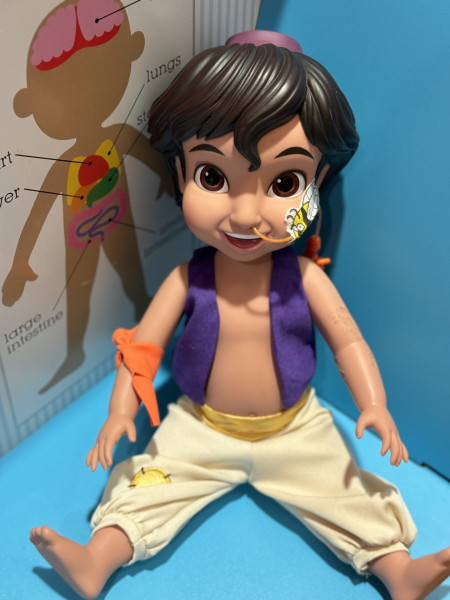
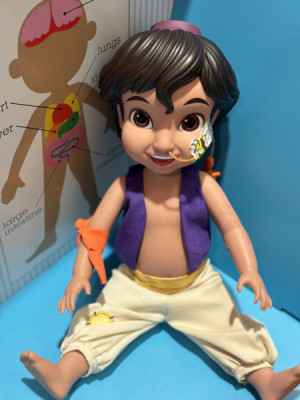
Child life specialists show patients videos of MRIs and CT scans to help them understand the process. An Aladdin doll in the playroom is equipped with a feeding tube through the nose to help explain this to little ones.
The child life specialists get to know medical staff and learn about doctor preferences, which helps them prepare families. One doctor might prefer parents step out during a sterile procedure, but it’s hard for a parent to leave their infant in that situation. Larrea and Scholes can explain what’s going to happen, escort parents out and emotionally support them during that time.
Sometimes the job involves helping siblings understand why their baby brother or sister is in the newborn ICU. While siblings younger than 17 can’t visit, the child life specialists provide books explaining what the NICU is.
Donations to pediatric services
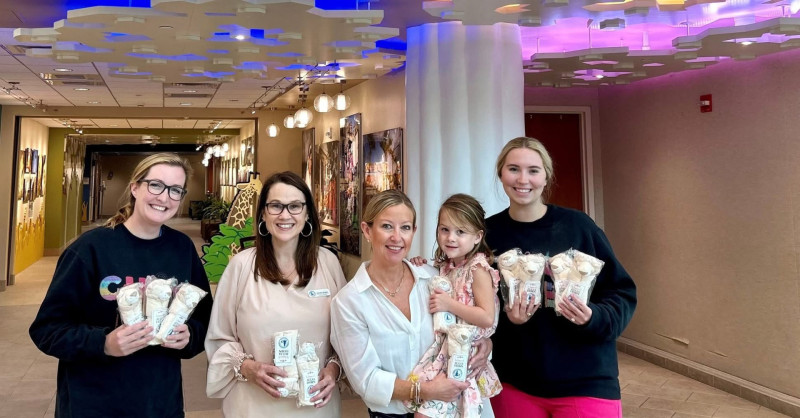
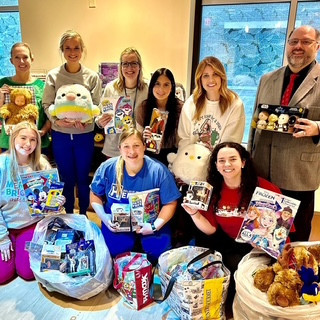
Another piece of the child life specialist’s role is managing donations from individuals, corporations and charitable groups.
“We get so many donations,” said Larrea. “Our playroom was all donation and grant based, and the Toy Foundation gave us a $25,000 grant to stock it. The Forrest Spence Fund, Project Sunshine and the Juvenile Diabetes Research fund have all contributed.”
The playroom construction was a gift from Spence and Becky Wilson, the hospital’s namesake benefactors. The Wilsons made this contribution in honor of their mothers. The Wilsons’ adult children funded an interactive light beam in the playroom.
The Forrest Spence Fund donates books and “lovies” for the NICU and provides quarterly breakfasts for newborn and pediatric ICU families. Their most recent donation provided two Kindles for the pediatric ICU. Physical books can’t be reused in a hospital setting, but Kindles can be sanitized between uses. Kids can access the Kindle library to find reading material for their age level and interests.
Many other generous individuals and organizations support Baptist's pediatric services. Former Memphis Grizzlies player Marcus Smart donated smart carts, several tablets and Nintendo Switches, and the Kindles are stored with these items for portability. Project Sunshine donates craft kits, Breakthrough T1D (formerly Juvenile Diabetes Research Foundation) provides bags with resources for newly diagnosed diabetes patients, and Girl Scout Sarah Gruber designed and built whimsical IV pole seats to bring cheer to pediatric patients.
Baptist Memorial Health Care Foundation funds party supplies for patients celebrating birthdays in the hospital, holiday parties and an annual NICU reunion.
Donations are greatly appreciated, and the only restriction is that items must be new. For donation inquiries, please email childlife@bmhcc.org.
“We are always on our toes, and we have to be flexible all the time,” said Larrea. “There is no ordinary day, and that’s what keeps it interesting.”
For more information about Baptist Children’s Hospital, please click here.