Virtual nurses lighten the load
Baptist embraces technology to maximize efficiency amid nursing shortage
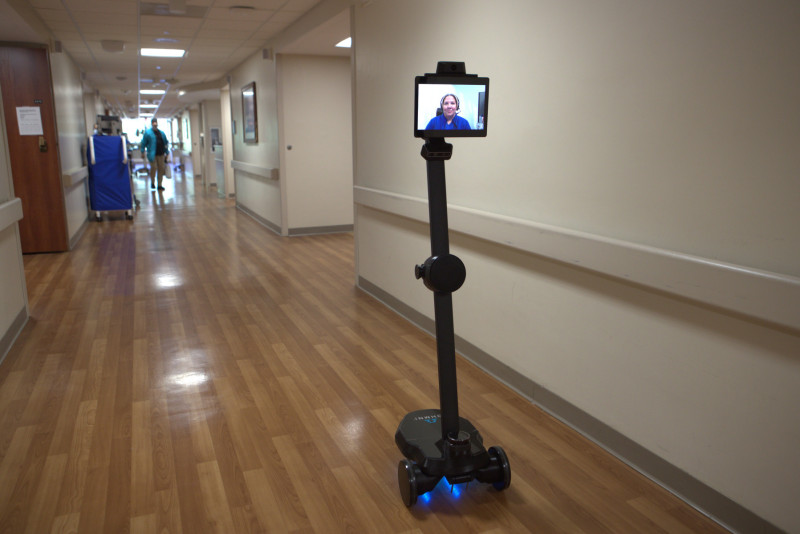
It may sound like something from The Jetsons, but in reality — Baptist Memorial Health Care is using OhmniLabs robot technology to ease the workload for bedside nurses.
“Coming out of COVID-19, we started dabbling in virtual nursing using TVs in patients' rooms to help with admission assessments,” said Meredith Palfrey, virtual services program manager. “Nurses were getting bogged down with time-consuming paperwork. An admission assessment is easy to do over a camera because it doesn’t involve any physical interaction.”
It takes roughly 25 minutes to go through patients' medical history, gather details about their home life and document all their medications. Discharges take another 15 minutes and pull nurses away from other patients who need in-person care.
Enter virtual nurses — experienced nurses who basically function as floaters. They don’t have specific patients assigned to them; they are intended to off-load tasks from on-site nurses as needed.
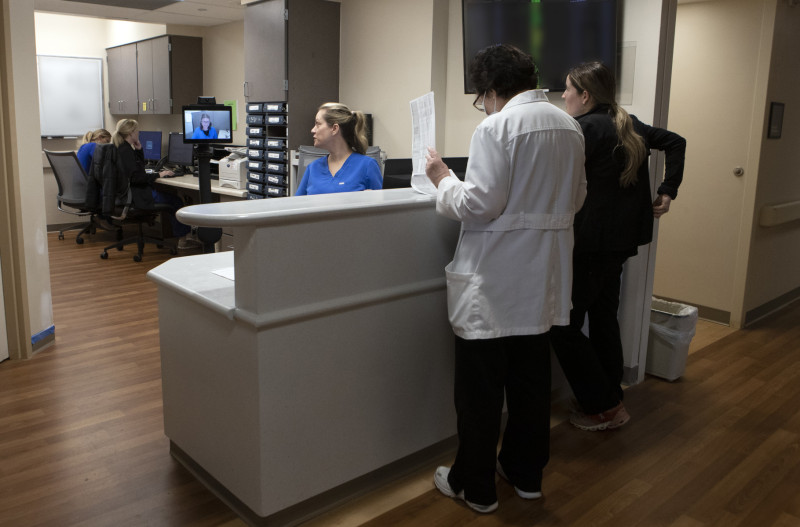
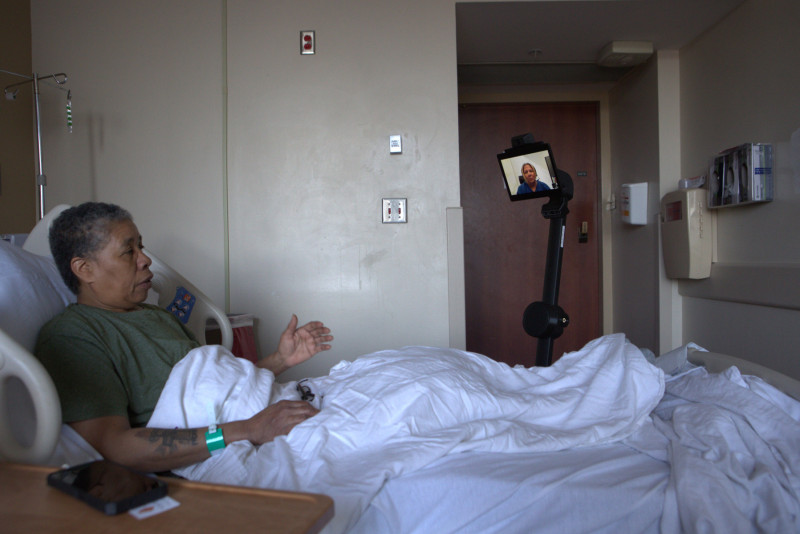
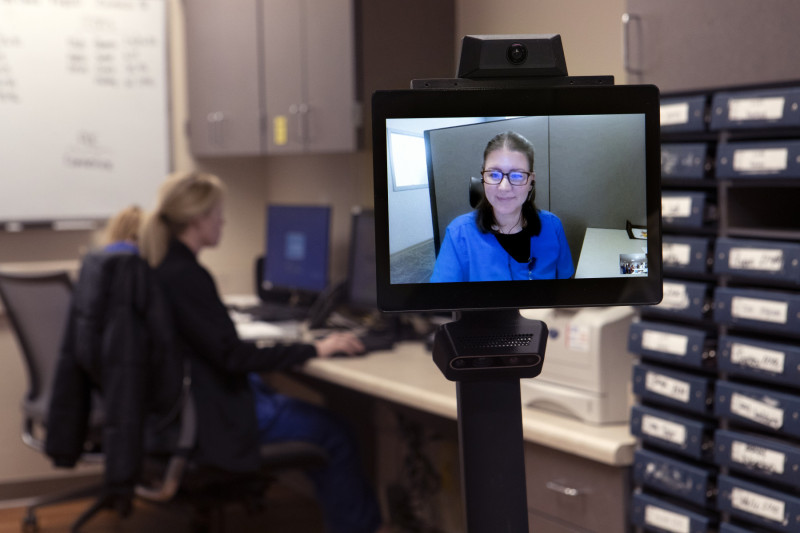
The virtual nurse is stationed at a central site. When bedside nurses need assistance, they contact the virtual nurse to handle the task. This nurse can access the patient’s electronic health record, independently drive the robot to a patient’s room and communicate with the patient and staff members through the robot’s camera.
For a discharge, a virtual nurse reads all documentation, attends multidisciplinary rounds and prepares discharge instructions. A surgery patient might need instructions for emptying a catheter or changing a bandage. The nurse instructs patients about follow-up care and medication schedules. They fill out the paperwork, attach education materials and print this information on the unit. The virtual nurse then drives the robot to the nurses station, asks someone to put the documents in the robot’s basket and returns to the patient’s room to discuss the information in detail.
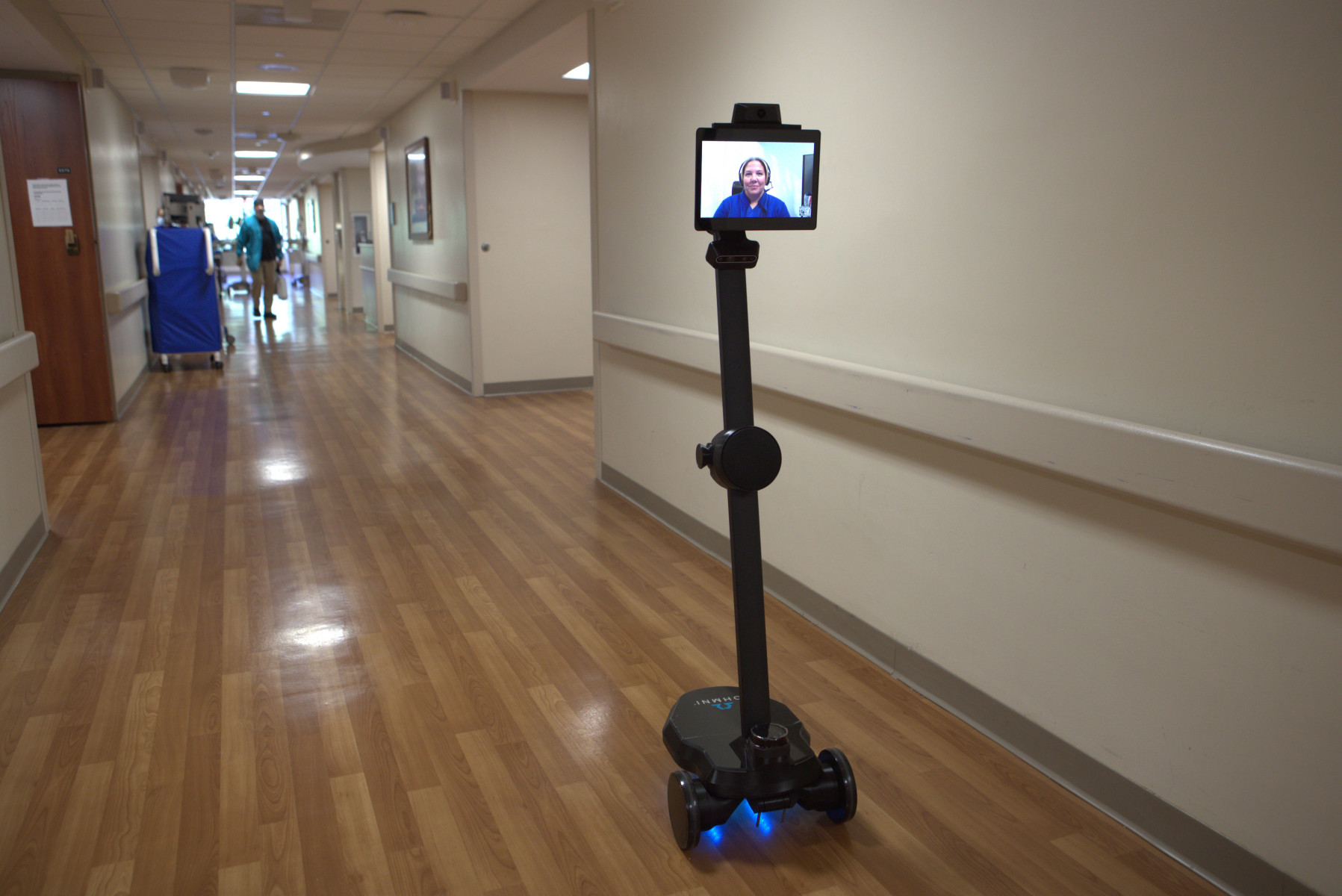
“When we first began, the process was complicated,” said Palfrey. “An on-site nurse would have to locate the device and move it to the right room. Getting the camera to the patient was the biggest hurdle, and that prompted us to come up with something innovative. It’s much more efficient now that virtual nurses can fully operate the robots.”
Virtual nurses must have significant experience on medical-surgical units. Some are nurses who can no longer handle the physical requirements of bedside nursing or may be considering retirement. Virtual nurses also may serve as a clinical resource or mentor for bedside nurses.
“Virtual nursing is a great option for nurses who have physical limitations or personal health concerns that make it difficult to work in the hospital setting,” said Stacy Hammett, TeleHealth systems administrator. “There’s a lot of physical exertion required of bedside nurses.”
Virtual health care isn’t just for admissions and discharges. Baptist also uses virtual monitoring technicians in 13 facilities. These individuals, also known as telesitters, virtually monitor patients at high risk for falls, eliminating the need for in-person monitoring. The telesitter can interact with patients, redirecting them back to bed or even activating the bed-exit alarm to notify on-site nurses. One virtual monitor can watch 12 patients at a time. Since August 2022, virtual monitoring technicians in Baptist Memorial hospitals have monitored patients for more than 350,694 hours.
Telesitters are not nurses but must have patient care experience. Most have been personal care attendants or home health patient sitters.
Baptist Memorial Hospital-Memphis was the first Baptist Memorial facility to introduce virtual nursing in April 2022. The hospital expanded its virtual services in February 2024 with the purchase of OhmniLabs robots, becoming the first hospital in the Memphis area to offer virtual nursing. A $740,000 grant from Baptist Memorial Health Care Foundation funds the robots and virtual nurse staff.
In January 2023, six Mississippi hospitals introduced virtual admissions — Baptist Memorial Hospital-Attala, Baptist Memorial Hospital-Booneville, Baptist Memorial Hospital-Calhoun, Baptist Memorial Hospital-Golden Triangle, Baptist Memorial Hospital-Leake and Baptist Memorial Hospital-Union County.
Mississippi Baptist Medical Center followed in February 2023, and Baptist Memorial Hospital-North Mississippi introduced virtual nursing in June 2023.
In 2023, the Tennessee Department of Health’s Healthcare Resiliency Program awarded Baptist $9.1 million for various projects and programs, which included $3.6 million earmarked to fund wireless network capabilities and TeleHealth equipment and services. This enabled Baptist to expand virtual services at three West Tennessee hospitals — Baptist Memorial Hospital-Carroll County, Baptist Memorial Hospital-Tipton and Baptist Memorial Hospital-Union City. The project, called the West Tennessee Virtual Care Project, began with virtual monitoring and admissions. These hospitals already had electronic intensive care units (eICU) in place but needed updated equipment. The grant included funding to replace and/or upgrade devices in the eICU and install new devices in rooms for virtual monitoring. In June 2024, the West Tennessee hospitals began upgrading cardiac monitoring and telemetry equipment and using virtual medicine for physician consults.
“Physician consults are a game changer in rural communities,” said Palfrey. “In Carroll County, we use TeleHealth for some specialties, such as cardiology. Our on-site ICU doctors and physicians care for the patients, but many patients really need an intensivist (a critical care specialist). Currently, the specialist must call the unit and ask someone to move a camera to the right room.”
A long-term component of the expansion includes the installation of cameras in all rooms on medical-surgical units. Those fixed devices are on track for installation by spring 2025.
In November 2024, Baptist Memorial Hospital-Collierville and NEA Baptist Memorial Hospital began virtual admissions.
Since 2022, Baptist has conducted more than 15,246 virtual admission assessments. At 25 minutes per session, that adds up to 6,352 hours in which on-site nurses were able to provide more bedside care. Virtual discharges began in February 2024 at Baptist Memphis and the West Tennessee hospitals. They handled more than 2,291 discharges at approximately 15 minutes each, the equivalent of 572 hours.
The Baptist team includes 18 virtual nurses, 17 virtual monitor technicians and 14 eICU nurses. Virtual nurses cover day shifts seven days a week, and Baptist Memphis is currently training a night shift virtual nurse.
So how do patients feel about interacting with robots?
"Patients are generally receptive to this process,” said Hammett. “Some even like to take selfies with the robots.”
“COVID-19 pushed the need for telemedicine to the forefront, and patients actually get more attention when virtual nurses are part of their care team,” said Palfrey. “A nurse on the floor may be caring for six patients, getting pulled in different directions throughout his or her shift. Virtual nurses can give their undivided attention to patients. As you might imagine, patients tend to like that.”