Navigating grief through the holidays
How to handle the tough times, and how to help when your loved ones are grieving
The holiday season often stirs up many emotions. Some people love the hustle and bustle, while others may feel overwhelmed and stressed. Navigating the holidays is particularly challenging for those who are grieving the loss of a loved one.
We asked Angela Hamblen Kelly, administrator of Baptist Centers for Good Grief, for advice to help grieving loved ones during the holiday season.
“Grief is already difficult on an average day, but special days can make those feelings seem unmanageable,” said Hamblen Kelly. “The weight of sadness feels heavier, the emptiness more acute, the anger more intense and the joy and spirit of gratitude harder to access.”
Family is a central focus of the holiday season, and when a key member of your family or friend group is missing, your loss is immediately highlighted. It affects your cherished holiday traditions and may create tension with other relatives if you disagree about how to manage the season without your loved one.
Tips to make the holidays a little less stressful
Just as there is no “right” way to grieve, there’s no magical cure for grief. It takes a lot of time, patience and all the coping skills you can muster. Here are some tips to help you cope this holiday season:
1. Expect to feel your grief. Your grief won’t disappear just because this is “supposed” to be a happy season.
2. Feel whatever you feel — and know that your feelings may change by the minute. It’s OK to feel sad, happy, angry or any combination of emotions.
3. Make a plan for yourself, but also be flexible. Create an exit strategy in case it feels too hard to stay at an event.
4. Accept your limits and manage your expectations. It’s OK to say no to that holiday party if it feels like too much to bear.
5. Include your loved one in the holiday — engage in deliberate remembering. “It’s important to acknowledge your loved one, even if it feels difficult. Family and friends also feel the weight of their absence, and talking about it allows you to support one another,” said Hamblen Kelly. You could do something as simple as lighting a candle and saying a prayer as you begin the day or activity.
6. Volunteer with a local charity. Helping somebody else is a great way to connect with others and find meaning during a time when many feel isolated.
7. Take care of your needs.
· Physical: We all know it’s important to eat healthy foods, but we also tend to go overboard with heavy foods around the holidays. Allow yourself some treats, but be mindful of getting the right nutrition, including plenty of water.
· Emotional needs: Take a nap if you need one, or just set aside some time for quiet reflection. Taking a break in the middle of a busy activity is OK and sometimes necessary. Step outside for some fresh air and give yourself grace if the festivities are too much. Make time to talk about your feelings with someone you trust, write in a journal or practice deep breathing.
· Spiritual needs: Pray, meditate or attend a religious service. If you’re part of a faith community, this can help you feel more connected to others.
Above all, maintain hope that the holidays will be good once again, even if not this year.
How to help a grieving loved one
Have you ever been unsure of what to say when someone is grieving? Maybe you fumble with your words, struggling to express yourself and then say something you regret later. Maybe you’re so worried about saying the “wrong” thing that you don’t say anything at all.
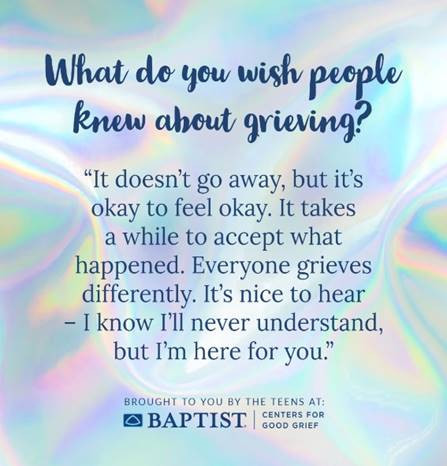
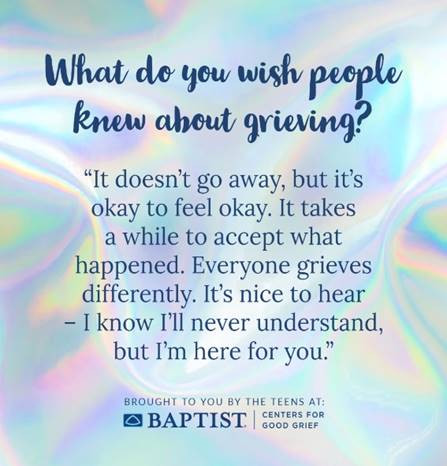
Sometimes what we think might be a comforting phrase is really the opposite. We asked some of the teens who attend Baptist’s grief centers what they really do or don’t like to hear. These sentiments apply to adults as well.
DO say: “I know I’ll never understand what you’re going through, but I’m here for you.”
DON’T say: “I know how you feel.”
DO say: “I’d love to hear about your loved one if you feel like talking.”
DON’T say: “They’re in a better place now./It was God’s plan.”
DO say: “I wish I knew the right thing to say, but I don’t. I’m here to listen, to hold your hand or just be with you.”
DON’T: Ask for details about the death, illness, etc.
DO: Ask how you can help them. Do they want visitors, someone to provide meals or someone to watch the kids?
DON’T: Share their personal grief with others.
DO: Use their loved one’s name and share a nice memory you have of that person.
Remember: It’s not about saying the best thing. You don’t have to make it your goal to cheer them up; the important part is to show up and listen when they want to talk. Keep in mind that grief doesn’t have an expiration date. Just because it’s been months or even years since someone died, the grief is still there and people continue to need support.

The Baptist Centers for Good Grief offers safe environments for grieving children, teens and adults to explore and express their feelings after the death of a loved one and to learn to thrive in a world without that special person. This important work is funded entirely by generous donations and grants, and these services are free of charge to anyone in the community.
This year, the Baptist Centers for Good Grief has provided more than 8,500 individual grief counseling sessions. For more information about Baptist Centers for Good Grief, click here.