Ask the pediatrician: Kids and concussions
When to seek emergency care for head injuries
Thomas Simmons is 8 years old and loves to be outside. One day after school, he was throwing a football with friends when he tripped over his shoelaces. Thomas went headfirst into a brick wall.
His mother arrived a few minutes later and saw Thomas wasn’t quite himself.
“He usually bounces back pretty quickly from injuries,” said Olivia Simmons, Thomas’ mother, “but not this time. He was dizzy and said his pain was a nine on a scale of one to 10.”
Simmons took Thomas to the pediatric emergency department at the Spence and Becky Wilson Baptist Children’s Hospital.
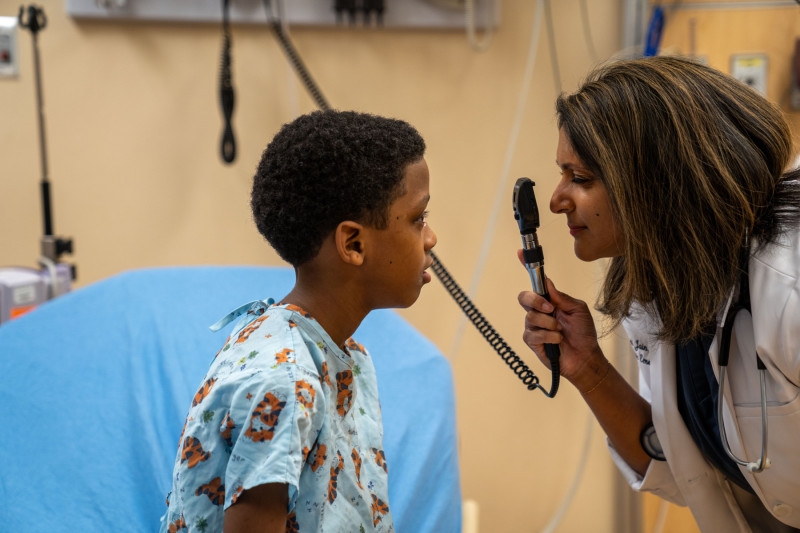
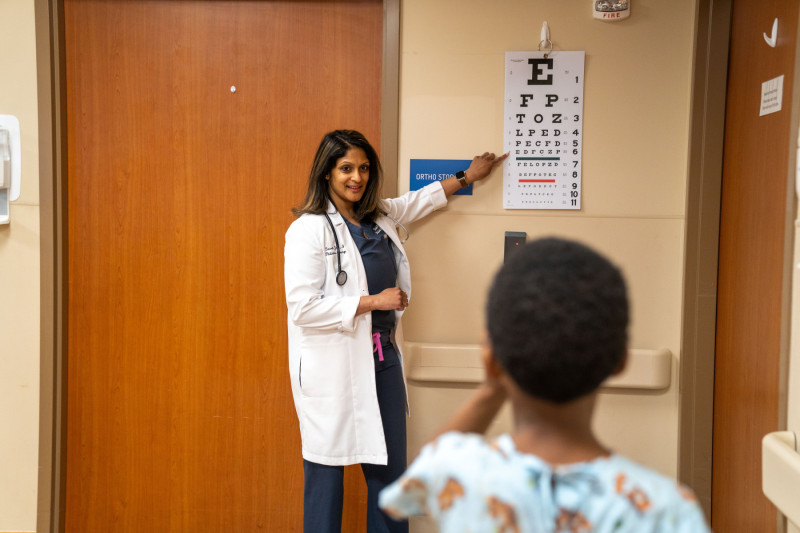
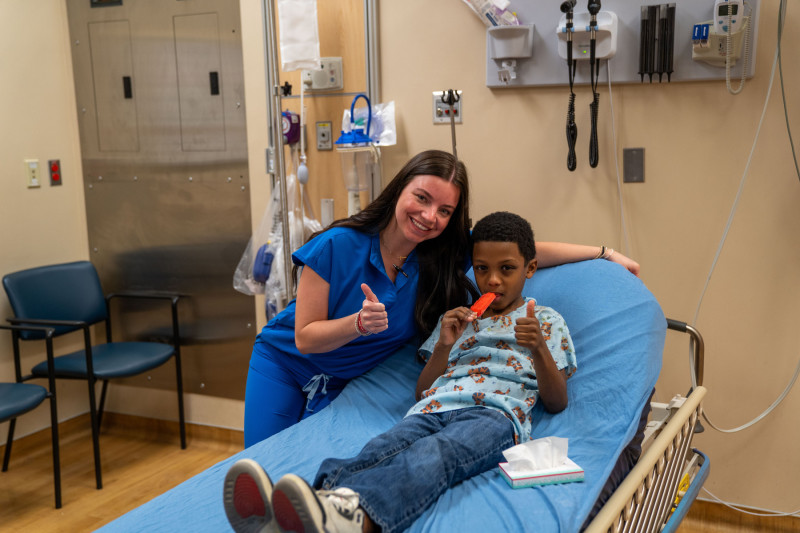 The hospital staff examined Thomas and did a neurology examination, then gave him pain medicine. He did not have a concussion but did have a knot on his head. The doctor instructed Simmons to watch him to see if it became hard to wake him up and to let them know if he began vomiting. Simmons slept with Thomas that night to keep an eye on him. He didn’t have any additional problems.
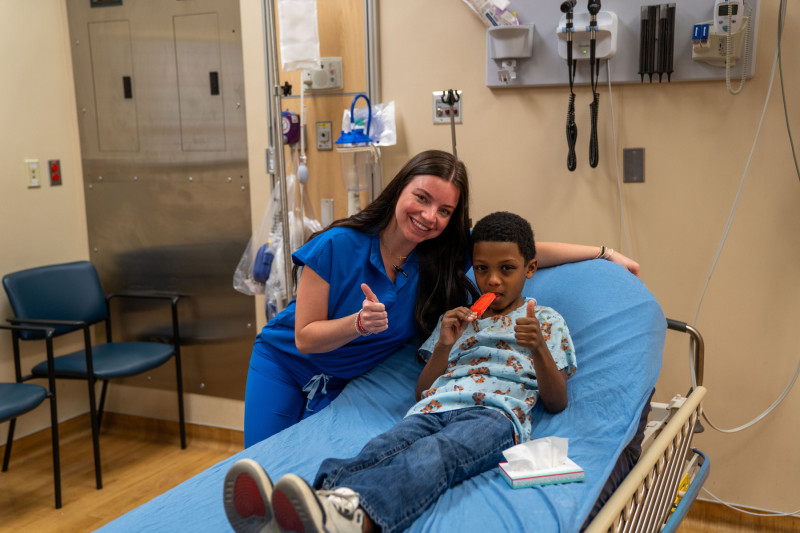
“Our experience was great,” she said. “They gave him a popsicle and a warm blanket, and the bed was big enough that I could lie next to him and snuggle with him. They attended to us quickly, which means a lot. When your baby is in pain, the last thing you want to do is sit and wait.”
When to seek emergency care for a head injury
It can be difficult to determine when a head injury is serious enough to warrant a visit to the emergency department. Some parents immediately head to the hospital, while others may watch their child at home before seeing a doctor.
 “Parents should always go to the emergency department if their child loses consciousness, has a severe headache or is behaving differently in any way,” said Dr. Sweeti Bhakta Jain, medical director of the pediatric emergency department.
Don’t worry about looking for dilated eyes yourself. While that’s a common thing to observe on medical TV shows, Jain explained that a patient’s eyes would only be dilated if there’s a brain bleed and swelling, in which case the patient would be unconscious. If the child is awake, there’s no need to check for dilation.
Dr. Sweeti Bhakta Jain has been a pediatrician for nine years. She is the medical director of the pediatric emergency department at the Spence and Becky Wilson Baptist Children’s Hospital and serves as the department chair of pediatrics. Additionally, she sees patients in the emergency department for approximately 80 hours each month.
About the Spence and Becky Wilson Baptist Children’s Hospital Baptist Children’s Hospital features a 10-bed pediatric emergency room, a 12-bed combined pediatric intensive care/general inpatient unit and an outpatient services area. With 24-hour pediatric intensivist coverage, multiple pediatric specialties and access to a critical care transport team for neonatal, pediatric and maternity patients, the hospital is equipped to provide high-quality care for a wide variety of pediatric patients and issues. For more information about the hospital, click here. The health care experience can be scary for children and their families. Baptist’s child life specialists offer medical play, free play, pre-operative teaching, procedure education, social interaction and other distractions or support to help minimize your child’s stress during medical procedures. Child life specialists are available in pediatric areas throughout the hospital, Monday through Friday. Click here to read about Baptist’s child life specialists. |