


Your Breast Health Center, Close to Home
Baptist Memorial Health Care takes a proactive and comprehensive approach to breast health services. With all cancers, early detection and treatment is your best line of defense; breast cancer is no exception. Baptist is at the forefront of comprehensive breast care, innovation and technology with imaging services throughout Tennessee, Arkansas and Mississippi.
Our breast health team includes surgeons, medical oncologists, radiologists, radiation oncologists, plastic surgeons and clinical cancer geneticists who work together to provide you with a personalized treatment plan.
In addition to the conveniently located breast health services throughout our service areas, we also offer a comprehensive breast program at the Baptist Women’s Health Center in Memphis, Tennessee. This location not only offers screening, diagnostic and pre-surgical services, it also provides enhanced care for those who are at a greater risk for breast cancer or have benign breast conditions.
Baptist's Comprehensive Breast Program offers an efficient multidisciplinary approach to care and care plans.
The Comprehensive Breast Program includes a staff of dedicated genetic counselors who help identify patients who with developing breast and possible other cancers due to their personal and family history.
Certain inherited gene mutations can sometimes increase a woman’s risk to develop breast cancer up to 85% during her lifetime. A blood or saliva sample can examine an individual's DNA to determine if he/she has an inherited gene mutation that can increase the risk to develop cancers.
If an individual is found to have an inherited gene mutation, there is discussion about early detection and risk reducing strategies.
Baptist Women's Health Center is accredited by the American College of Radiology as a Center of Excellence and also by the National Accreditation Program for Breast Centers (NAPBC).
In addition to breast cancer, Baptist Women’s Health Center delivers care for the following breast conditions:
- Breast pain
- Infection
- Cysts or lumps
- Fibroadenomas
- Masses
- Nipple changes or discharge
Contrast Enhanced Mammography
A contrast-enhanced mammogram can detect cancers that may not be visible on a standard mammogram, generating fewer false positives than MRI breast imaging and making breast tumors easier to see. It involves injecting a contrast dye into the blood before taking two mammogram images. The contrast goes to areas of increased blood flow in the body. Because breast cancers generally have more blood flow, they will often attract the contrast.
Contrast-enhanced mammograms have several additional benefits. The process is faster, less expensive and generally better tolerated than MRI. The mammograms may also provide patients with a definitive answer on the day of their visit compared to possibly waiting days or weeks for MRI results.
Contrast-enhanced mammograms are often recommended for patients with increased risk factors, such as dense breast tissue, because they have a four to six times higher risk of developing breast cancer than women with no dense tissue.
Appointments and services may vary by site, so confirm details when you schedule.
METRO MEMPHIS/WEST MEMPHIS/DESOTO
-
Baptist Medical Group - Outpatient Care Center - Germantown
MAP2100 Exeter RoadMemphis, TN 38138 -
Baptist Memorial Hospital - Memphis
MAP6019 Walnut Grove RoadMemphis, TN 38120 -
Baptist Memorial Hospital - Collierville
MAP1500 West PoplarCollierville, TN 38017 -
Baptist Memorial Hospital - Desoto Women's Center
MAP7601 Southcrest ParkwaySouthaven, MS 38671 -
Baptist Women's Health Center
MAP50 Humphrey's BoulevardMemphis, TN 38120 -
Baptist Memorial Hospital - Crittenden
MAP2100 North 7th StreetCrittenden, AR 72301
WEST TENNESSEE
-
Baptist Memorial Hospital - Tipton
MAP1995 Hwy 51 South, Suite #203Covington, TN 38011 -
Baptist Memorial Hospital - Union City
MAP1201 East Bishop StreetUnion City, TN 38261 -
Baptist Memorial Hospital - Carroll County
MAP631 RB Wilson DriveHuntingdon, TN 38344 -
Baptist Memorial Hospital - Carroll County
MAP205 Hospital DriveMcKenzie, TN 38201
NORTH EAST ARKANSAS
-
NEA Baptist Memorial Hospital Breast Imaging Center
MAP4802 East Johnson AvenueJonesboro, AR 72401 -
Baptist Memorial Hospital - Paragould
MAP900 West KingshighwayParagould, AR 72450
NORTH MISSISSIPPI
-
Baptist Memorial Hospital - Desoto Women's Center
MAP7601 Southcrest ParkwaySouthaven, MS 38671 -
Baptist Memorial Hospital - Booneville
MAP100 Hospital DriveBooneville, MS 38829 -
Baptist Memorial Hospital - North Mississippi
MAP1100 Belk BoulevardOxford, MS 38655 -
Oxford Diagnostic Center
MAP504 Azalea DriveOxford, MS 38655 -
Baptist Memorial Hospital - Union County
MAP200 Hwy 30 WestNew Albany, MS 38652 -
Baptist Memorial Hospital - Golden Triangle
MAP2520 5th Street NorthColumbus, MS 39705 -
Baptist Memorial Hospital - Calhoun City
This location does not currently offer mammograms. Please call or refer to map links for other locations in North MS.
MAP140 Burke Calhoun City RoadCalhoun City, MS 38916
CENTRAL MISSISSIPPI
-
Mississippi Baptist Medical Center - Madison Radiology
MAP401 Baptist Drive, Suite #105Madison, MS 39110 -
Mississippi Baptist Center for Breast Health
MAP1225 North State StreetJackson, MS 39202 -
Baptist Medical Center - Yazoo City
Please call your provider.
MAP823 Grand AvenueYazoo City, MS 39194 -
Baptist Medical Center - Attala
MAP220 MS Highway 12West Kosciusko, MS 39090 -
Baptist Memorial - Leake
This location does not currently offer mammograms. Please call or refer to the above link for Attala, MS.
MAP1100 MS Highway 16East Carthage, MS 39051 -
Baptist Memorial Anderson Regional Breast Center
MAP2124 14th StreetMeridian, MS 39301 -
Baptist Memorial Group - Starkville Center for Breast Health and Imaging (OCH)
MAP102 Doctor's ParkStarkville, MS 39759
Risk assessment and genetic testing can help you develop a breast cancer screening and management plan with your doctor. Take this short quiz to learn more about factors that could possibly put you in the high-risk category.
What can I expect at my mammogram?
Screening mammograms (image) help detect tumors or calcium deposits that can't be felt. Some of these abnormalities can indicate the presence of breast cancer. Watch the video below to learn how to prepare for a mammogram at one of our imaging centers near you.
Why do I need further diagnostic testing?
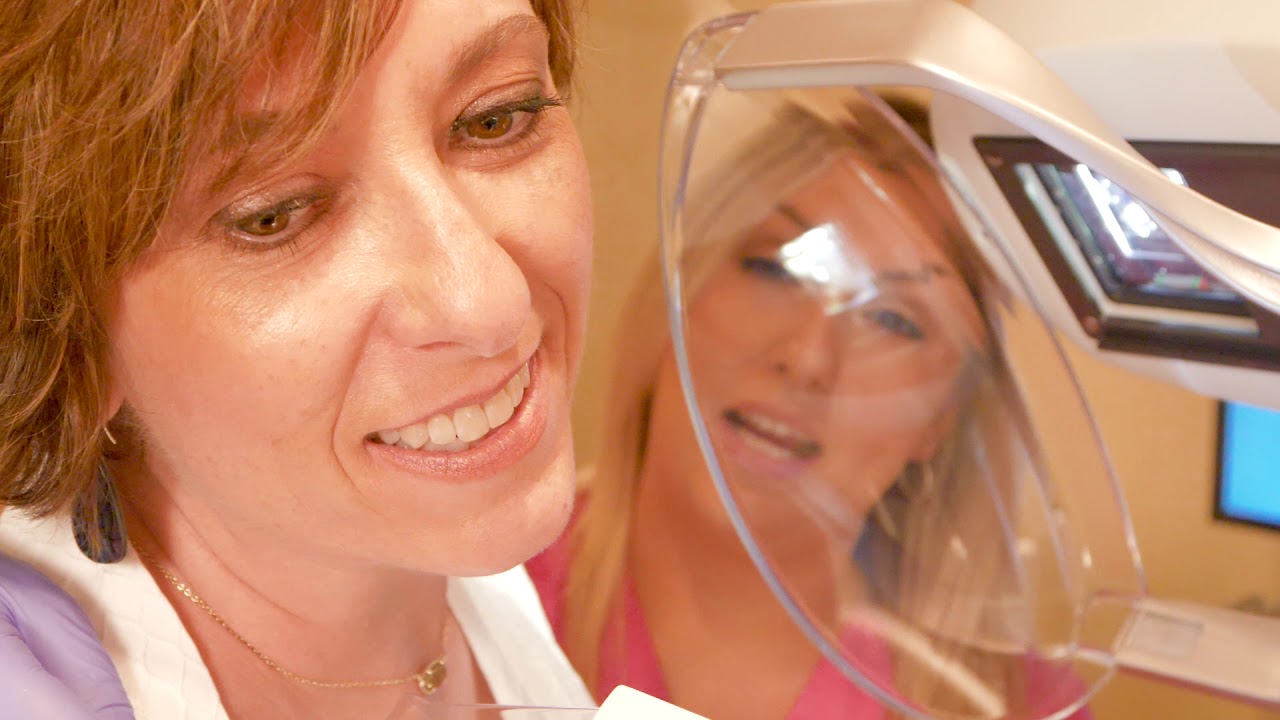
Diagnostic mammograms are ordered when a new physical change in the breast is identified on your exam. This test is also ordered when a screening mammogram detects an abnormality in the breast. This test must be ordered by providers. Learn what to expect when you arrive at our breast health center for further diagnostic testing by watching the video.
A breast ultrasound may be needed to get a closer look at an abnormality identified during a mammogram. This test uses sound waves and does not expose the patient to radiation.
Your doctor may order a magnetic resonance imaging (MRI) for additional testing. An important breast health service, this test is also used for screening women who are at high risk for breast cancer. During this test, dye will be injected through an IV in your arm. The use of dye is to measure blood flow patterns in the breast. This exam uses magnetic energy and no radiation.
A small amount of breast tissue is removed using a needle and sent to the lab for review under a microscope to determine if the tissue is cancerous.
Breast cancer treatment varies depending on the type and stage of the cancer, as well as the patient's medical history and overall health. Common breast cancer treatments include:
- Surgery
- Chemotherapy
- Radiation therapy
- Hormone therapy
- Targeted therapy
- Immunotherapy
